




What Are [Orthodontic] Rubber Bands – How Do They Work?

Did you know that elastics were used before braces for teeth alignment? These elastic bands were first used in 1843 by Dr. Edward Maynard to align the top and bottom row teeth. In 1850, Dr. E.J Tucker further enhanced this technique by making the bands smaller to make them more comfortable in the patient’s mouth.

By the time Edward Angle, who is regarded as the father of American orthodontics, founded the Angle School of Orthodontia, the elastics had been in use for over half a century. The use of these bands in dental procedures has never been abandoned. Orthodontic elastics remain a staple in the field of orthodontics. These bands accelerate teeth movement. The tensile forces that the bands provide ensure that the treatment takes a lot less time.

Orthodontic rubber bands typically enter the treatment procedure after the patient has had their braces for about 4-6 months. These elastic bands are a vital part of the treatment for some individuals because of the connective forces that they provide which are required to position the teeth and jaws into proper alignment. However, the Inconsistent wearing of the bands may not only jeopardize the treatment process but will also see you wear your braces for longer.

The Different Types of Elastic Bands

Typically, there are two types of orthodontic elastics. Ligatures are the smaller kinds which go around the brackets so as to help the archwire to retain its position on your brackets. The purpose of ligatures is to pull or push your teeth in the direction that is required by the treatment. Ligatures come in all sorts of colors you can select from to enhance your smile during treatment.

The larger forms of elastics simply referred to as rubber bands, are utilized to apply pressure on the jaw to assist it in achieving the proper alignment for your bite. These bands can be placed in different configurations to match the tensile force requirements you need. The more common configurations include the top-to-bottom and inter-arch configurations. They also come in various colors.

What Do They Do?

There are several reasons to why you need elastic bands for your treatment. Most of the time, however, it is to correct an overbite or underbite. On rare occasions, they might be used to adjust a cross-bite.

While ligatures, archwires, and brackets are used to move the teeth along the gum-line at an angle in which they point away from the gum, elastic bands pull the jaw backward or forwards so that they can put your bottom and top rows of teeth in one line. This helps in making your teeth fit together more comfortably when you bite down thus improving your smile. The bands also play an essential role in speeding up the process of straightening or moving a tooth or teeth.

To perform this feat, a bracket with a hook is placed along the side of your mouth. This fixture is placed on both the right and left side of the bottom and top rows of your teeth. A band is then attached to the hooks on each side of the mouth. The amount of tensile force required to fix the under or overbite will determine the angle at which the band is placed.

You Might Be Wondering

Typically, patients with excessive overbites are the ones in most need of elastics. An overbite is termed as extreme when it exceeds the standard measurement of 2-3 millimeters. This situation will routinely see an orthodontist employ the use of rubber bands.

Your orthodontist will use either of the two types of ligatures. The first kind, referred to as single elastic ligatures, is used to apply force to your teeth in varying degrees. This will depend on how the band is tied to your teeth. The second kind is known as connected elastic ligatures. These bands are used to either close the spaces between teeth or to move a particular group of teeth together in a specific direction.

When and How to Wear Them

Patients need to follow instructions carefully when wearing elastic bands for dental treatment. Following the directions given ensures that your treatment proceeds on schedule. This will provide you with optimal results while avoiding the prolonging of the procedure.

For most occasions, elastic bands need to be worn 24 hours every day. Some specialists may allow you to remove them only when you eat, floss, and brush. Understandably, it might be unrealistic to wear them continuously in some cases. Individuals with certain configurations might find it difficult to open their mouths wide enough to eat.

Nevertheless, having your bands on while you chew can significantly reduce your treatment period. Additionally, it is recommended that patients have their bands on when sleeping. Also, patients should not double up on the bands. On paper, it might seem like this might speedup up the process, but in fact, doing this is counterintuitive because it makes the teeth move slower while damaging their roots.

In addition, after you take a band out, discard it and put on a new one. You might have to replace the bands 3-4 times each day depending on your daily activities and the strength of the elastics. Hence, ensure that you have your pack of bands on you at all times.

What to Expect

One of the more exciting parts of the treatment procedure is choosing the colors of your bands. Incorporating this form of orthodontic treatment will naturally come with some anxiety; however, you will get the hang of it in no time. A sore jaw, teeth, and mouth are all typical in the first few days of treatment.

Orthodontic elastic bands play an essential role in your orthodontic treatment. They help move your jaw and teeth into the correct alignment. When the time reaches for you to start using them, it is imperative to ensure that you understand how to use them. Our office is committed to helping you through your orthodontic treatment. If you have any queries regarding your orthodontic treatment call on Dr. Panucci and we will schedule an appointment.

Please contact us today and  make every orthodontic visit a fun experience.

BEACH BRACES ORTHODONTICS
220 N. Aviation Blvd. Suite A
Manhattan Beach, CA 90266
Phone: (310) 379-0006


What Are [Orthodontic] Rubber Bands – How Do They Work?

Share this article

Recent Posts

Two people standing outside a corner storefront with large glass windows and a blue sign
May 18, 2026
Wondering what happens at an orthodontic consultation in Manhattan Beach? Learn what to expect, what is checked, and which questions to ask.
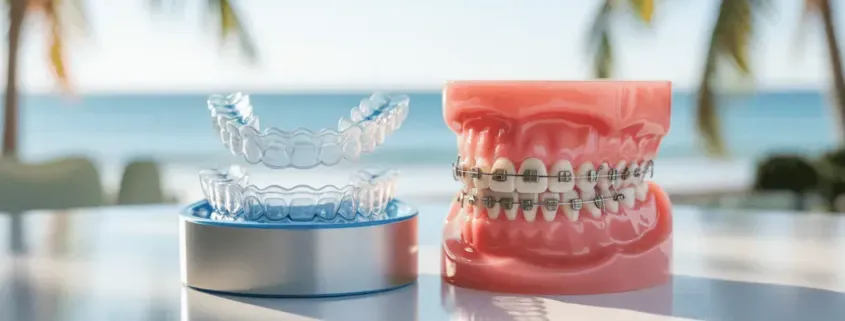
Clear aligner and metal braces dental models on a table with a blurred beach background
May 11, 2026
Choosing between Invisalign and braces in Manhattan Beach? Learn how smile goals, bite issues, lifestyle, and treatment needs affect the best choice.
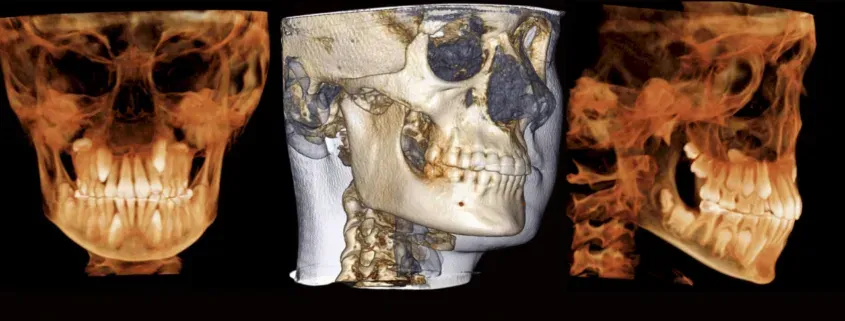
Three skulls shown side by side, one in a gray 3D scan between two brown skull renders.
April 27, 2026
Learn why 3D imaging before Invisalign or braces helps your orthodontist assess teeth, jaws, bite and airway before planning treatment.
April 20, 2026
If you live in Manhattan Beach and your child needs orthodontic treatment, Invisalign Teen is probably already on your radar. It is easy to see why. It offers

April 13, 2026
Looking for the best orthodontist for adults in Manhattan Beach? Learn what to look for, which treatment options matter, and how to choose with confidence.

April 7, 2026
Looking for ceramic braces in Manhattan Beach? Learn the benefits, cost, care needs, and whether clear braces are the right choice for teens or adults.

March 30, 2026
Wondering about adult Invisalign cost in Manhattan Beach? Learn what affects pricing, monthly payment options, insurance help, and what to expect at Beach Braces.

March 16, 2026
Looking for braces payment plans in Manhattan Beach? Learn about financing, insurance, monthly payment options, and how Beach Braces makes treatment affordable.

March 9, 2026
Looking for Invisalign payment plans in Manhattan Beach? Learn about financing, insurance, monthly options, and what to expect before starting treatment.

January 19, 2026
Get confident results with Invisalign for upper or lower teeth only and see your South Bay Area child beam

Show More