
Sleep Apnea and Orthodontics: What Manhattan Beach Families Should Know
Updated May 2026: Sleep apnea is more than loud snoring. For some adults and children, it can affect breathing, sleep quality, daytime energy, concentration, mood, and long-term health.
Orthodontics does not replace medical diagnosis or sleep medicine. However, an orthodontist can play an important role in spotting jaw, bite, palate, and airway-related concerns that may deserve a closer look.
At Beach Braces in Manhattan Beach, we often speak with parents, teens, and adults who are unsure whether snoring, mouth breathing, restless sleep, or jaw development could be connected. This guide explains where orthodontics may fit, when to seek medical advice, and what signs are worth paying attention to.
Can Orthodontics Help With Sleep Apnea?
Orthodontics may help some patients with airway-related concerns, especially when jaw growth, bite alignment, a narrow upper jaw, or dental development affects breathing during sleep.
However, sleep apnea should be diagnosed by a qualified medical provider. An orthodontist may work alongside physicians, sleep specialists, ENTs, pediatricians, and dentists to support the right treatment plan.
The safest way to think about it is this:
Orthodontics may be part of the conversation. It should not be treated as a standalone cure for sleep apnea.
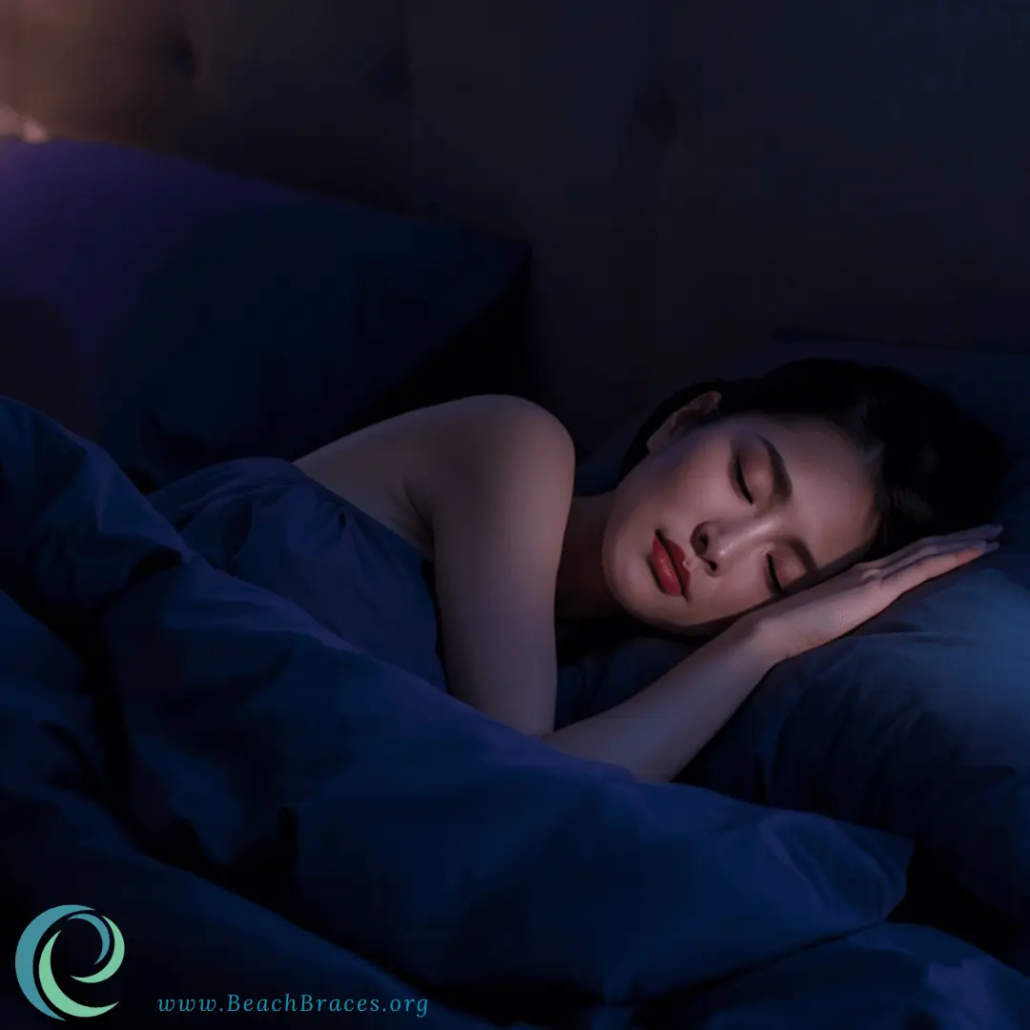
What Is Sleep Apnea?
Sleep apnea is a sleep-related breathing disorder where breathing repeatedly stops, becomes shallow, or is interrupted during sleep.
The most common type is obstructive sleep apnea, often called OSA. This happens when the airway becomes partly or fully blocked during sleep. When breathing is interrupted, the body may briefly wake itself up to reopen the airway. Many people do not remember these awakenings, but they often feel the effects the next day.
Common signs of obstructive sleep apnea can include loud snoring, pauses in breathing, gasping or choking sounds during sleep, morning headaches, waking up tired, and daytime sleepiness.
Sleep apnea can affect adults, teenagers, and children. It is not something to ignore, especially when sleep problems begin to affect school, work, sports, mood, focus, or daily energy.
Snoring vs Sleep Apnea: What Is the Difference?
Not everyone who snores has sleep apnea.
Snoring happens when air movement causes tissues in the throat or airway to vibrate during sleep. It can be harmless, but it can also be a warning sign, especially when it is loud, frequent, or paired with other symptoms.
Sleep apnea is different because breathing is repeatedly disrupted during sleep.
Signs that snoring may be part of a bigger issue include:
- Loud or frequent snoring
- Pauses in breathing during sleep
- Choking, coughing, or gasping at night
- Restless sleep
- Morning headaches
- Waking up tired
- Daytime sleepiness
- Poor concentration
- Irritability or mood changes
- Dry mouth in the morning
In children, the signs can look slightly different. A child with sleep-related breathing problems may have mouth breathing, restless sleep, bedwetting, difficulty concentrating, behavioral changes, or trouble waking up in the morning.
If you notice these signs, it is worth speaking with your physician, pediatrician, or a qualified sleep professional.
Why Orthodontists Pay Attention to Airway and Jaw Development
Orthodontists do more than straighten teeth.
During an orthodontic evaluation, we look at how the teeth, jaws, bite, and facial structures are developing and working together. That includes factors that may influence the airway, such as:
- A narrow upper jaw
- Crowded teeth
- Crossbite
- Bite alignment
- Lower jaw position
- Palate shape
- Mouth breathing habits
- Facial growth patterns
- Tongue position
- Dental arch development
These signs do not automatically mean a patient has sleep apnea. However, they can help us understand whether there may be an orthodontic or jaw-development issue that deserves attention.
This is especially important for children and teens because early evaluation can sometimes identify growth patterns before they become more complicated.
Orthodontic Insight from Dr. Panucci
Sleep-related breathing concerns are rarely solved by looking at one thing in isolation.
At Beach Braces, we consider the full orthodontic picture, including jaw growth, bite alignment, crowding, palate width, oral habits, and the symptoms patients or parents are noticing at home.
If something suggests a possible sleep-related breathing concern, the next step may involve working with a physician, ENT, pediatrician, dentist, or sleep specialist.
Our role is to assess the orthodontic side of the picture and help guide the next sensible step.
Can Braces Treat Sleep Apnea?
Braces are not a primary treatment for sleep apnea.
The main role of braces is to correct tooth alignment, bite problems, spacing, crowding, and jaw-related orthodontic concerns. In some cases, improving the bite or supporting better jaw development may be part of a wider care plan, but braces should not be presented as a guaranteed sleep apnea treatment.
For children and teens, orthodontic treatment may help address certain structural issues, such as a narrow upper jaw, crowding, or bite problems. If sleep apnea is suspected, medical evaluation is still important.
For adults, braces may improve alignment and bite function, but they are not the same as oral appliance therapy for obstructive sleep apnea.
Can Invisalign Help With Sleep Apnea?
Invisalign is designed to move teeth and improve alignment. It is not the same as a sleep apnea oral appliance.
Some adults with sleep apnea may be prescribed a custom oral appliance that helps position the lower jaw forward during sleep. This type of appliance is different from Invisalign aligners.
That said, Invisalign may still be useful for patients who have orthodontic issues such as crowding, spacing, bite problems, or tooth alignment concerns. If sleep apnea is part of the conversation, we may recommend that you also speak with a medical provider or sleep specialist.

Oral Appliances and Sleep Apnea
Oral appliance therapy can be a treatment option for some adults with obstructive sleep apnea, especially those with mild to moderate OSA, or patients with severe OSA who cannot tolerate positive airway pressure therapy, often called PAP or CPAP.
These appliances are usually custom-made and designed to help keep the airway more open during sleep, often by gently holding the lower jaw in a forward position.
However, oral appliance therapy should be based on a proper diagnosis and treatment recommendation. It is not something patients should guess at or buy online without professional guidance.
If you have already been diagnosed with obstructive sleep apnea, or if your physician has suggested an oral appliance, an orthodontic evaluation may help determine whether your bite, jaw position, or dental alignment should be considered before or during treatment.
Sleep Apnea in Children: Why Early Evaluation Matters
Children can also experience obstructive sleep apnea or sleep-related breathing problems.
In children, airway concerns may be connected to several factors, including enlarged tonsils or adenoids, nasal obstruction, mouth breathing, allergies, jaw development, palate width, or facial growth patterns.
From an orthodontic perspective, we often pay close attention to:
- Narrow upper jaws
- Crossbites
- Crowding
- Open bites
- Mouth breathing
- Thumb-sucking or prolonged oral habits
- Lower jaw position
- Facial growth patterns
A child with suspected obstructive sleep apnea should be referred to an appropriate medical provider for diagnosis and treatment. The American Academy of Pediatric Dentistry also notes that nonsurgical intraoral appliances should be considered only after a complete orthodontic or craniofacial assessment as part of a multidisciplinary approach.
That is why early orthodontic evaluation can be helpful. It does not replace medical care, but it may uncover jaw or bite issues that are worth addressing as part of the bigger picture.
When Should Parents Ask About Sleep and Orthodontics?
Parents are often the first to notice something is not quite right.
You may want to ask about an orthodontic evaluation if your child has:
- Frequent mouth breathing
- Loud snoring
- Restless sleep
- Crowded teeth
- A narrow upper jaw
- Crossbite
- Difficulty breathing through the nose
- Daytime tiredness
- Trouble focusing at school
- Behavioral changes
- Morning headaches
- A history of enlarged tonsils or adenoids
- Jaw alignment concerns
None of these signs automatically means your child has sleep apnea. But they are worth discussing, especially if they appear together.
When Should Adults Ask About Sleep and Orthodontics?
Adults may want to ask about the orthodontic side of sleep-related breathing concerns if they have:
- Snoring concerns
- A sleep apnea diagnosis
- CPAP intolerance
- Jaw discomfort
- Bite issues
- Crowding
- Worn teeth
- Morning headaches
- A physician or dentist has mentioned oral appliance therapy
- Difficulty keeping the mouth closed during sleep
For adults, the most important first step is proper diagnosis. If sleep apnea is suspected, a sleep study or medical evaluation may be needed.
Once diagnosis and treatment options are clear, orthodontics may help assess whether your teeth, bite, jaw position, or alignment could affect the success or comfort of an oral appliance.
What Happens During a Beach Braces Consultation?
A consultation at Beach Braces is designed to give you clarity.
If you or your child has concerns about snoring, mouth breathing, jaw development, or bite alignment, we can evaluate the orthodontic side of the picture.
During your visit, we may review:
- Tooth alignment
- Bite relationship
- Jaw development
- Palate width
- Crowding or spacing
- Crossbite or open bite
- Facial growth patterns
- Oral habits
- Symptoms you have noticed at home
- Whether orthodontic treatment may be appropriate
- Whether referral to another provider may be recommended
If we see signs that suggest a possible airway or sleep-related concern, we may advise you to speak with your physician, pediatrician, ENT, dentist, or a sleep specialist.
This team-based approach matters because sleep apnea is not just a tooth problem. It can involve the airway, nose, throat, jaw, muscles, sleep quality, and overall health.
Local Care for Manhattan Beach and South Bay Families
For busy families in Manhattan Beach, Hermosa Beach, Redondo Beach, El Segundo, Torrance, and the wider South Bay, sleep concerns can easily get brushed off.
A child may be described as restless, distracted, or hard to wake up.
An adult may assume loud snoring is just annoying rather than something worth checking.
A teen may feel tired during school or sports and think it is normal.
But when sleep problems affect energy, mood, concentration, school, work, or daily life, it is worth asking better questions.
Beach Braces can help you understand whether jaw growth, bite alignment, palate width, or orthodontic development may be part of the picture.
A Clear and Honest Word About Diagnosis
Beach Braces does not replace your physician or sleep specialist.
Sleep apnea should be diagnosed by a qualified medical provider. Our role is to assess the orthodontic and jaw-development side of the picture and help guide the next step when appropriate.
That may mean orthodontic treatment.
It may mean monitoring growth and development.
It may mean referral to a physician, pediatrician, ENT, dentist, or sleep specialist.
The goal is not to force treatment. The goal is to help you understand what is happening and what options may be worth exploring.
FAQs About Sleep Apnea and Orthodontics
Can braces cure sleep apnea?
No. Braces should not be described as a cure for sleep apnea. Braces can correct tooth alignment and bite issues, and in some cases orthodontic treatment may support jaw development or a wider care plan. Sleep apnea should be diagnosed and managed with guidance from a qualified medical provider.
Can Invisalign treat sleep apnea?
Invisalign is not a sleep apnea treatment. Invisalign aligners are designed to move teeth and improve alignment. Some adults with sleep apnea may use a custom oral appliance, but that is different from Invisalign and should be recommended as part of a proper treatment plan.
Is snoring always a sign of sleep apnea?
No. Snoring does not always mean sleep apnea. However, loud snoring, breathing pauses, choking or gasping sounds, morning headaches, and daytime tiredness may be warning signs that deserve medical attention.
Should my child see an orthodontist for mouth breathing?
Mouth breathing can have several causes, including nasal obstruction, allergies, enlarged tonsils or adenoids, oral habits, or jaw development issues. An orthodontic evaluation can help assess the dental and jaw-development side of the picture. Your child may also need to see a pediatrician or ENT.
Can a narrow palate affect breathing during sleep?
A narrow upper jaw or palate may be one part of a wider airway and growth-development picture, especially in children. It does not automatically mean a child has sleep apnea, but it may be worth evaluating if there are symptoms such as mouth breathing, snoring, crowding, or restless sleep.
Who diagnoses sleep apnea?
Sleep apnea is diagnosed by a qualified medical provider, often using a sleep study. Dentists and orthodontists may help identify signs that deserve further evaluation, but they do not replace medical diagnosis.
Are oral appliances the same as braces?
No. Braces move teeth and correct alignment. Oral appliances for sleep apnea are usually custom devices designed to help keep the airway more open during sleep. They serve different purposes.
When should I book an orthodontic consultation?
Consider booking a consultation if you or your child has bite concerns, crowded teeth, a narrow upper jaw, mouth breathing, snoring, jaw alignment issues, or if another healthcare provider has suggested an orthodontic evaluation.
Take the Next Step
If you or your child snores, breathes through the mouth, wakes tired, or has concerns about jaw development or bite alignment, an orthodontic consultation can be a helpful first step.
At Beach Braces in Manhattan Beach, we can assess the orthodontic side of the picture and help you understand whether further medical, dental, or sleep evaluation may be appropriate.
Call or text Beach Braces at (310) 379-0006 to schedule a complimentary consultation.
Sleep Apnea and Orthodontics: What Manhattan Beach Families Should Know


Sleep Apnea and Orthodontics (5 EPIC FACTS)

Dr Patti Panucci attended the University of Louisville School of Dentistry for four years, where she graduated with a DMD degree (May 2000) among the Top 10 in her class. Following that, she headed west to Los Angeles to complete her three-year residency at one of the top-ranked orthodontic programs in the country – the University of Southern California.
Along with her certificate in orthodontics, Dr. Panucci earned a master’s degree in craniofacial biology. During those three years, she fell in love with Southern California beach life and decided that this was where her future lay.





Leave a Reply
Want to join the discussion?Feel free to contribute!